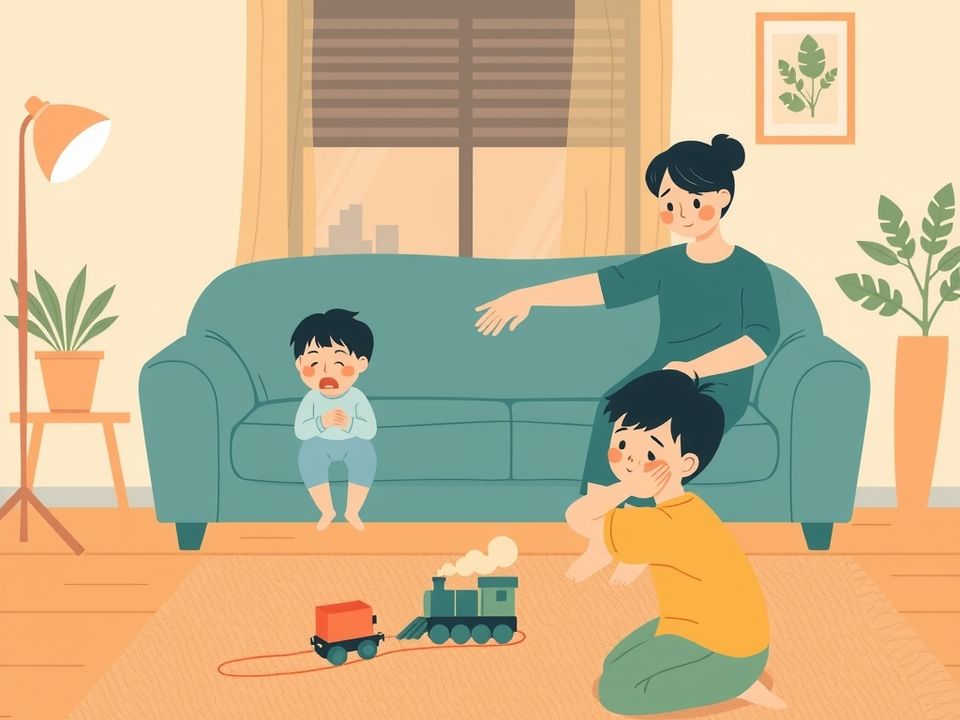
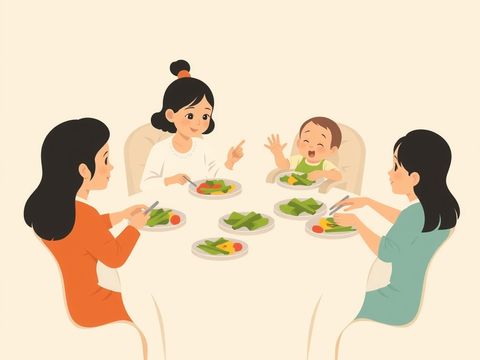
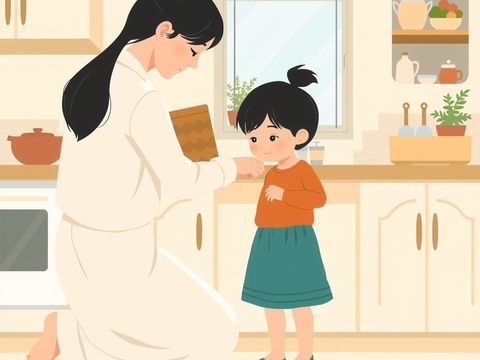
Quick guides for the hard moments. Each one starts with what to do right now, then explains why it happens, what to say and how to make the next time less likely.
How to use these guides
Find your situation in the list below and read the Right now box first: it is written for the moment itself. The rest (why it happens, things to say, prevention and when to get help) is for later, once things have settled.
Every guide builds on the best-proven approach and links to the matching cards in the Toolbox. The age chips under each title show which ages a guide fits, and By age has more for each stage.
First aid for any hard moment
Safety first. If anyone could get hurt, deal with that before anything else: move your child, or hold them calmly (see safe holds).
Calm yourself, then your child. Take a breath and lower your voice. In its 2018 policy statement, the American Academy of Pediatrics says that yelling at or shaming children is minimally effective in the short term and not effective in the long term.64
Use few words. Say one short, calm sentence, then stop.
Deal with it later. Save the teaching, talking and problem-solving for when everyone is calm enough to listen.
Respond the same way every time. In a meta-analysis of 77 evaluations of parenting programs, programs that taught time-out and the importance of consistent parenting had larger effects.11
Nearly all preschoolers have tantrums sometimes,105 so in the moment your job is not to stop the storm but to keep everyone safe, stay calm and hold the limit.
1-3 years
3-5 years
5-7 years
Right now
Check for safety first. Move your child away from anything hard or sharp, and move breakables and other children out of reach.
Take a slow breath, keep your voice low and say very little: name the feeling and the limit once, then stop talking. Save reasons for later.
Hold the limit. Don’t give in to whatever started it, and don’t argue, bargain or lecture. Staying calm and quiet nearby is planned ignoring of the tantrum, not of your child.
Stay close. Some children want a hug or your lap (time-in); others need a little space with you in sight. Both are fine.
When it’s over, welcome your child back warmly and move on. No lecture now; talk later if you need to.
Why it happens
Tantrums are a normal part of early childhood. In a community study of 1,490 preschoolers, parents reported that 83.7% had tantrums at least sometimes, but only 8.6% had them every day.105 Ordinary tantrums tend to be frustration boiling over in situations you could almost predict.105 Think of hearing no, having to stop something fun or a toy that won’t work.
Tired, stressed children have less self-control to draw on. A review of research on executive functions, the mental skills that include self-control, notes that stress and lack of sleep each impair them.72 Keep an eye on the tired, rushed moments.
Holding the limit calmly matters. In a meta-analysis of experiments on single parenting behaviors, briefly withdrawing attention after a child refused to do what was asked increased cooperation.40 So stay close and kind, but don’t let the tantrum change the answer. If tantrums come with hitting or running off, see aggression and dangerous behavior in the best-proven approach.
Things you can say
You’re really angry. I’m right here.
The answer is still no. I’ll stay with you until you feel better.
Do you want a hug, or should I just sit here with you?
I’m moving the blocks so nobody gets hurt.
That was a big feeling, and you got through it. Let’s get some water.
Preventing the next one
Notice when tantrums tend to happen (tired, hungry, rushed, a sudden change of plan) and plan around the hardest times of day.
Protect sleep. In its 2016 consensus statement, the American Academy of Sleep Medicine recommends 11-14 hours per 24 hours at ages 1-2 and 10-13 hours at ages 3-5, naps included, and links regularly getting enough sleep with better behavior and emotional regulation.123
Give a heads-up before changes (“Five more minutes, then bath”) and try offering choices you’re happy with either way.
Catch the calm moments and say so. Meta-analyses of parenting program trials found that only 3 of 26 techniques were linked with stronger effects on disruptive behavior, and positive reinforcement, praise in particular, was among them.16
Spend a few minutes a day in connection time, playing what your child chooses. In a meta-analysis, parenting programs that built positive parent-child interaction had larger effects.11
On a calm day, make a calm-down plan with your preschooler or older child.
When to get help
Tantrums are often unpredictable (out of the blue), very long or destructive. In a large study, temper loss that was a clinical concern tended to look like this, rather than like a reaction to everyday frustration.105
During tantrums, your child hurts themselves or is often violent toward people or things. In one study, these behaviors were more common in preschoolers with depression or disruptive behavior disorders than in healthy preschoolers.69
Your child has many tantrums at preschool or daycare, not just at home, or has a very hard time recovering afterward. Both were more common in preschoolers with disruptive behavior disorders than in healthy ones.69
Tantrums are getting more frequent or more intense as your child gets older, or they get in the way of family life, preschool or friendships.
You feel close to losing control yourself. That’s a reason to get support, not a failure: see help lines.
A meltdown in a store or restaurant is a tantrum with an audience: handle it the way you would at home, somewhere quieter if you can, and let the onlookers look.
1-3 years
3-5 years
5-7 years
Right now
Safety first. Near roads, parking lots or crowds, hold your child’s hand or pick them up and move somewhere safe.
Focus on your child, not the onlookers. You don’t owe anyone an explanation.
Move somewhere quieter if you can: a corner, outside, or your parked car with you beside them.
Say the limit once, calmly. Don’t buy the thing or strike a new deal to stop the noise.
Stay close and wait it out, as you would at home. See tantrums.
If it won’t settle, it’s fine to leave. Ending the outing early is a fair logical consequence, and it takes the pressure off you too.
Why it happens
A meltdown in public is usually the same tantrum you see at home, with two extra pressures: the place is full of things your child wants, and you feel watched. Being watched can pull parents toward ending it fast, either by giving in or by getting harsh. Getting harsh is not a shortcut: in its 2018 policy statement, the American Academy of Pediatrics says that yelling at or shaming children is minimally effective in the short term and not effective in the long term.64
Your best bet is to do what you would do at home. In a meta-analysis of 77 evaluations of parenting programs, programs that taught time-out and the importance of consistent parenting had larger effects.11 Consistency means the answer in the store is the same as the answer at home, even with people watching.
Sometimes the outing itself is the problem: too long, too loud, too close to nap time. Leaving early is not losing; it gives everyone a fresh start. For more, see public places in the best-proven approach.
Things you can say
I know you really want it. It’s not coming home with us today.
We’re going outside until you feel calmer. I’m staying right here with you.
Hold my hand or ride in the cart. You pick.
You calmed your body down. Thank you. Let’s finish up together.
We left the park early because the yelling didn’t stop. We’ll try again another day.
Preventing the next one
Go when your child is rested and fed, keep trips short, and bring a snack and something to do.
Before you go in, say the plan and one or two rules in simple words: “We’re buying milk and rice, not toys. Stay next to the cart.” See clear expectations and instructions.
Give your child a job: holding the list, choosing between two apples, putting things in the cart.
Notice good behavior while it’s happening: “You’re walking right next to me. That really helps.” Meta-analyses of parenting program trials found praise among the few techniques linked with stronger effects on disruptive behavior.16
Use when-then for the fun part: “When we’ve paid, then we can go to the playground.”
Practice on short, easy trips you can leave without losing much before trying a long one.
When to get help
Meltdowns happen almost everywhere you go, are getting worse rather than better, or you have started avoiding outings because of them.
Your child often bolts toward traffic or into crowds. See dangerous behavior.
Noise and crowds seem to overwhelm your child again and again, or you have other questions about their development, such as speech, play or how they connect with people. Raise it at a checkup, and see developmental differences.
You notice any of the warning signs listed under tantrums.
Most toddlers hit, bite or push at times,101 and for most children it fades as they grow,71 so respond the same calm way every time: stop it, comfort the child who was hurt, and follow with a brief consequence.
1-3 years
3-5 years
5-7 years
Right now
Step in straight away. Calmly hold your child’s hands or move them out of reach, and say one short line: “No hitting. Hitting hurts.” See safe holds.
Turn to the child who was hurt first and comfort them. The hurt child gets your attention before the one who hit.
Follow with the same brief consequence every time: for a toddler, a short break away from the play with you nearby; for an older child, a short time-out or losing the toy or game for a while.
Keep your voice calm and your words few. No long lecture.
Never hit, bite or pinch back to show how it feels. The reasons are below.
Once everyone is calm, help your child make amends if they can: checking on the other child, fetching a cold cloth, helping rebuild the tower.
Why it happens
Physical aggression is a normal stage of early childhood, not a sign of a bad child. In a study of 2,253 young children, physical aggression already appeared at 12 months, was more common at 24 and 36 months, and declined from the third birthday onward.67 A Canadian study that followed 10,658 children between ages 2 and 11 found that most used physical aggression occasionally or rarely as toddlers and rarely or almost never by pre-adolescence, while about 1 in 6 (16.6%) stayed on a high, stable path.71
What helps is a calm response that is the same every time. In a meta-analysis of 77 evaluations, parenting programs that taught time-out and consistent parenting had larger effects.11 In a small study of 3 children, 2 of whom had intellectual disabilities, brief time-out reduced aggression and disruption.42 And in a small classroom study, a system in which each aggressive act cost a smiley face (with a short reprimand), and keeping at least one face earned a reward, substantially reduced aggression in 4 preschoolers.48 For the full plan, see aggression in the best-proven approach.
Hitting or biting a child back to show how it feels can seem logical. But a meta-analysis found that parental corporal punishment was associated with more immediate compliance and also with more aggression in children,54 and, in its 2018 policy statement, the American Academy of Pediatrics recommends that adults not hit children at all.64 A minority of researchers argue that the harmful-looking results for ordinary spanking are likely due to other differences between families that the studies could not fully control.62Physical discipline sets out both sides.
Things you can say
No hitting. I won’t let you hurt anyone.
You’re mad. You can stomp your feet or squeeze this pillow. You can’t hit.
Teeth are for food, not for people.
Hitting means a break from the game. You can come back when your hands are ready to be gentle.
Let’s check on your brother. What could help him feel better?
Preventing the next one
Watch for the build-up (crowded play, a tired afternoon, a fight over a toy) and step in early with redirection or a different toy.
When everyone is calm, teach what to do instead: say stop, walk away, get a grown-up, stomp, squeeze a pillow. Practice it in play.
Notice gentle play out loud: “You asked for a turn. That was kind.” Meta-analyses of parenting program trials found praise among the few techniques linked with stronger effects on disruptive behavior.16
Agree on the same rule and the same consequence with everyone who cares for your child: the other parent, grandparents, childcare.
When to get help
Hitting or biting is frequent and not easing as your child gets older, or it is getting worse. Most children use physical aggression less as they grow, but in a large Canadian study about 1 in 6 stayed on a high, stable path.71
Someone is getting hurt: real injuries, aggression toward babies or pets, or your child’s preschool or daycare is raising concerns.
Aggression comes with other worries about development, such as speech, play or getting along with others. See developmental differences.
You have used a consistent plan for several weeks and nothing has changed. See when it is not working.
Siblings will clash; your job is to stop anyone getting hurt, stay out of the judge’s seat, and coach them to work it out themselves.
1-3 years
3-5 years
5-7 years
7-10 years
10-12 years
Right now
If anyone is being hurt, step in and separate them first. Safety comes before fairness.
Give each child a calm spot apart for a few minutes, with no blame yet.
Don’t try to work out who started it in the heat of the moment.
If they’re fighting over something, put it out of reach for now: “The truck takes a break until you two have a plan.”
If someone hit, use your usual consequence for hitting, whoever did it. See hitting and biting.
Once everyone is calm, sit down for solving problems together: each child says what happened and how they feel, then they suggest ideas and pick one to try.
Why it happens
Siblings share space, toys and their parents’ attention, so disagreements come with the territory. Hurting each other is a different matter, and it deserves to be taken seriously. In a national sample of 3,599 children and youth, those who had experienced sibling aggression in the past year (psychological, property or physical) reported more mental health distress, and among children up to age 9, even mild physical assault was linked with more distress than among older youth.103
With coaching, children can learn to sort out conflicts themselves. When mothers of 5- to 8-year-olds were trained to mediate their children’s disputes, the children reasoned, talked about feelings and understood each other’s motives more often than children in control families, and younger siblings in particular were better able to solve conflicts.49 The study looked only at short-term effects. In another program, 4- to 8-year-old siblings who were taught emotional and social skills got along better and handled their emotions better than children on a wait list.82 For more, see siblings in the best-proven approach.
Things you can say
I’m not going to decide who’s right. I’m going to help you both work it out.
You both want the same toy. That’s a tough problem. What ideas do you have?
Tell me what happened. Then it’s your sister’s turn, and nobody interrupts.
In our family we don’t hurt each other. You can be angry and still keep your hands to yourself.
You worked that out yourselves. That was hard, and you did it.
Preventing the next one
Give each child some one-on-one connection time, even 10 minutes a day.
Notice them getting along: “You two built that together.” Meta-analyses of parenting program trials found praise among the few techniques linked with stronger effects on disruptive behavior.16
Agree on a few family rules together at a family meeting, such as no hurting and ask before you take.
Plan for the usual flashpoints: a timer for turns, a shelf for special things that don’t have to be shared, separate seats in the car.
On calm days, practice the skills: naming feelings, asking for a turn, trading, walking away.
Avoid comparing your children, even to encourage them.
When to get help
One child is regularly hurt, frightened or picked on, or the aggression mostly goes one way.
Fights often cause injuries or involve objects used as weapons.
A child seems anxious, sad or withdrawn, or starts dreading time at home. In a national sample, sibling aggression in the past year was linked with more mental health distress in children and teens.103
Offer two small choices: “Dinosaur pajamas or striped ones? Hop to bed or tiptoe?”
Use when-then: “When your teeth are brushed, then we’ll read.”
If your child gets out of bed, walk them back calmly with as few words as possible, every time. No new conversation, no extra story.
If they need reassurance, promise to come back and check on them soon, and keep the promise.
Why it happens
Bedtime asks a lot of a child: stop playing, say goodnight to you and lie still in the dark, usually at the end of a long day for everyone. Stalling for one more drink or one more hug makes sense from their side.
The good news is that bedtime problems usually respond to behavioral approaches. A review of 52 treatment studies concluded that they work for bedtime problems and night waking in infants and young children: 94% of the studies reported them effective, and more than 80% of treated children showed clinically significant improvement that lasted 3 to 6 months.120 Even just adding a steady routine helps. In a 3-week randomized study of 405 mothers and their infants or toddlers, a consistent nightly routine shortened the time children took to fall asleep, cut the number and length of night wakings and improved mothers’ mood.121
Sleep and daytime behavior go together: in its 2016 consensus statement, the American Academy of Sleep Medicine links regularly sleeping the recommended hours with better attention, behavior, learning and emotional regulation.123
Things you can say
Bath, pajamas, teeth, two books, a song, lights out. Just like every night.
Dinosaur pajamas or the striped ones? You choose.
It’s sleep time now. I’ll come back to check on you soon.
Back to bed. I love you. See you in the morning.
You stayed in your bed all night. You can be proud of that.
Preventing the next one
Same steps, same order, every night. In a randomized study, a consistent nightly routine improved infants’ and toddlers’ sleep.121
Put the steps on a picture chart, so the chart is the boss instead of you. Try the routine chart.
Keep bedtime and wake-up time steady and plan for enough sleep. In its 2016 consensus statement, the American Academy of Sleep Medicine recommends, per 24 hours, 11-14 hours at ages 1-2 and 10-13 hours at ages 3-5 (naps included), and 9-12 hours at ages 6-12.123
Turn screens off well before bed. In its 2016 statement on young children and media, the American Academy of Pediatrics recommended no screens in the hour before bedtime,110 and in a systematic review of 67 studies of school-age children and teens, 90% linked screen time with worse sleep, mainly shorter or later, though cause and effect was not confirmed.117
Fit some connection time into the evening, so bedtime isn’t the only time your child gets you to themselves.
Praise staying in bed the next morning, warmly and specifically.
When to get help
Bedtime is still a nightly battle after a few weeks of a steady routine. Ask your pediatrician about behavioral sleep help: a review of 52 studies concluded that behavioral treatments work for bedtime problems and night waking in young children.120
Your child snores loudly, gasps or seems to stop breathing during sleep.
Your child regularly sleeps much less than recommended for their age and seems tired, irritable or unfocused during the day.
Fears, nightmares or night waking are getting worse, or worries at bedtime come with anxiety during the day as well.
Pushing children to eat can backfire,116 so keep the jobs clear: you decide what is served and when, your child decides whether and how much to eat, and you discipline behavior at the table, not appetite.
1-3 years
3-5 years
5-7 years
7-10 years
Right now
Take a breath and drop the battle over bites: no pleading, bribing, threats, following them around with a spoon or counting spoonfuls.
If your child won’t eat, say calmly that it’s fine and that the next food comes at the next meal or snack. Then stick to it, without cooking something else.
Keep the talk off the food. Chat about the day, not about what’s left on the plate.
Respond to behavior, not appetite. Throwing food or climbing on the table gets one calm reminder; if it happens again, the meal is over for your child. See logical consequences.
Let comments like “yuck” pass without a reaction (planned ignoring), and notice good table manners out loud.
For toddlers, keep sitting time short and end the meal when they’re clearly done.
Why it happens
A child who refuses dinner may not be hungry, may be wary of something unfamiliar, or may have discovered that the table is a great place to have a say. Whatever the reason, pressure can make it worse. In an experiment with preschoolers, children ate significantly more and made far fewer negative comments about the food when they were not pressured than when they were asked to finish it.116
Repeated tasting without pressure helps. In a small randomized trial in 3 elementary schools (49 children), those who were offered a taste of sweet red pepper in 8 daily sessions over 2 weeks, and told they could eat as much as they liked, came to like it more and ate more of it than children who had no treatment.125 A sticker reward for eating at least one piece gave in-between results that did not differ significantly from tasting or from no treatment.125
So the discipline side of mealtimes is narrow: steady routines, calm limits on behavior at the table, and no battles over bites. For what to cook and how to make family meals something everyone enjoys, see our sister site Show Tell Share.
Things you can say
You don’t have to eat it. It can just sit on your plate.
Is your tummy full, or would you like some more?
Food stays on the table. If it gets thrown, dinner is over.
Dinner’s finished. Next food is snack time after your bath.
Thanks for sitting with us. I like eating together.
Preventing the next one
Keep regular meal and snack times, so your child comes to the table hungry rather than full from grazing.
Serve new foods again and again, with no pressure, next to something your child already likes. In a small school trial, repeated tasting raised children’s liking for a new vegetable and how much they ate.125
You don’t need prizes for eating. In the same trial, a sticker reward for eating did not clearly help.125
Eat together when you can, with screens off. In its 2016 statement on young children and media, the American Academy of Pediatrics recommended screen-free mealtimes.110
Let your child help: washing vegetables, setting the table, choosing between two vegetables for dinner. For ideas on food and family meals, visit our sister site Show Tell Share.
How to end screen time with less fighting: warn ahead, stop at a natural break, hold the limit calmly, and agree on a family plan for when screens are used.
1-3 years
3-5 years
5-7 years
7-10 years
10-12 years
Right now
Give a warning a few minutes before the end, then stop at a natural break, such as the end of an episode or a level.
Go to your child and get their attention before you speak. Then say it once, clearly: time to turn it off. See clear expectations and instructions.
Offer a small choice about how it ends: your child presses the off button, or you do.
If your child refuses, turn it off yourself, calmly and without a lecture. This is follow-through, not a punishment.
Name the feeling and keep the limit: your child can be upset, and the screen stays off. Don’t hand it back to stop the crying.
Move straight on to the next thing: a snack, a walk, a job you do together.
Why it happens
Screens are built to hold attention. In its 2026 policy statement, the American Academy of Pediatrics notes that most digital platforms are designed to boost engagement and profit, not to support children’s health and development.122 Stopping something designed to be hard to stop is hard even for adults, so protests at switch-off time are worth expecting and planning for.
Limits are worth holding. In a Canadian study that followed 2,441 children, more screen time at age 2 was linked with lower scores on a developmental screening test at age 3, and more screen time at age 3 with lower scores at age 5, based on mothers’ reports.86 In a review of 67 studies of school-age children and teenagers, 90% linked screen time with worse sleep, mostly shorter or later sleep, though the review could not confirm that screens were the cause.117
This guide is about limits and switching off. For how screens fit with sleep and learning, see sleep and screens in Encouraging learning.
At 10 to 12. Social media and group chats enter the picture. The American Academy of Pediatrics’ 2016 statement for ages 5 to 18 asks for a family media plan with consistent rules, boundaries on content and on sharing personal information, and open conversation about what happens online, and says no single rule fits every child.114 Make the plan with your preteen, keep devices out of the bedroom at night (later bedtimes and shorter sleep are the most consistent findings on media and sleep),112 and keep the fear in proportion: an analysis of three large datasets covering more than 355,000 teenagers found only a small link between technology use and well-being.90 See screens on the Preteens page.
Things you can say
2 more minutes. When the timer rings, the tablet goes to sleep.
This is the last episode. Do you want to turn it off, or should I?
You really wanted to keep watching. It’s off now. Let’s go find a snack.
You turned it off as soon as the timer rang. Thank you.
Let’s make our screen plan together: when, where and for how long.
Preventing the next one
Make a family media plan: when, where and for how long screens are used, written down where everyone can see it. The researchers behind a large study of screen time in young children recommend one.86
Keep meals screen-free and turn screens off 1 hour before bed, as the American Academy of Pediatrics advised in its 2016 statement on young children and media.110
Follow the same statement’s age guide for children aged 0 to 5: before 18 months, no screens except video chat; at 18 to 24 months, if you start, choose high-quality programs and watch together; at ages 2 to 5, 1 hour a day or less of high-quality programs, shared with you when you can.110
When your child lies, stay calm, make the truth easy to tell, and deal with what happened rather than punishing the lie harshly.
3-5 years
5-7 years
7-10 years
10-12 years
Right now
Take a breath before you respond, so the conversation starts calm.
If you already know what happened, don’t ask a test question like “Did you do this?” Say what you saw: “I see crayon on the wall.”
Tell your child you’d be glad to hear the truth. In an experiment with 372 children aged 4 to 8, more children told the truth when the adult had said they would be happy to hear it.99
When your child does tell the truth, thank them first. Then deal with what happened.
If the story is really a wish (“A monster did it”), answer the wish: “You wish it hadn’t happened.” Then fix it together.
Why it happens
Lying is common in young children. In lab studies, children were asked not to peek at a toy while the adult wasn’t looking, and most peeked. Among 2- and 3-year-olds, most 2-year-olds who peeked admitted it, but older children were more likely to deny it.76 Among children aged 3 to 8, most who peeked later lied about it, although what they said next sometimes gave the truth away.97
Early lies go along with growing thinking skills. Children’s first denials were related to understanding what someone else believes and to self-control, and keeping a lie going was related to more advanced reasoning about what others think.97 Among 2- and 3-year-olds, executive function skills (such as self-control) predicted which children lied, even after taking age into account.76 So a young child’s lie is a chance to teach honesty, not proof that something is wrong.
How adults respond matters. In a natural experiment in West Africa, more 3- and 4-year-olds lied about peeking at a school that relied on punishment than at a school that did not, and they were better at keeping the lie going.98 In another experiment with children aged 4 to 8, children who were told they would feel good about themselves for telling the truth were less likely to lie when they did not expect punishment than when they did.99 Both studies point the same way: make the truth safe to tell.
At 10 to 12. Lies get more sophisticated: in an experiment with 8- to 16-year-olds, how well children covered a lie, but not whether they lied, went with their executive functioning skills.75 Catching every lie stops being possible. Making the truth safe to tell, and separating the consequence for the deed from the consequence for the lie, matters more. See honesty and trust on the Preteens page.
Things you can say
I’ll be really glad if you tell me what happened.
Thank you for telling me the truth. That took courage. Now let’s fix it together.
I see juice on the floor. Let’s get a cloth.
You wish the cup hadn’t broken. Me too. What can we do now?
When you tell me the truth, it’s easier for me to trust you with more.
Preventing the next one
Make the truth safe to tell: stay as calm as you can when you hear bad news, and keep consequences small and linked to what happened.
Let your child know that honesty matters to you, and that you want to hear the truth even when it’s hard to hear.
Don’t ask questions you already know the answer to.
Notice honest moments out loud: “You told me even though you knew I might be upset. Thank you.” See specific praise and attention.
Be honest with your child yourself, in small things too: if you’re not buying a toy, say no rather than “The store is closed.”
Spend a little one-on-one time together each day, so your child has easy chances to tell you things. See connection time.
When to get help
Lying is frequent and comes with other serious problems, such as stealing, hurting others or trouble at school.
Your child seems to lie out of fear, or you suspect they are covering for someone who is hurting them. See help lines.
When your child refuses, give one clear instruction, offer a small choice or a when-then, and follow through calmly, every time.
1-3 years
3-5 years
5-7 years
7-10 years
10-12 years
Right now
Get close, get your child’s attention, and give one short instruction as a statement, not a question: “Shoes on, please,” not “Can you put your shoes on?” See clear expectations and instructions.
Then wait quietly for a few seconds. Don’t repeat it or add more words yet.
If your child starts to do it, say thank you right away.
If not, say it once more and add a small choice or a when-then: “Red shoes or blue?” or “Shoes first, then you can bring your dinosaur.”
Still no? Follow through calmly with a small consequence, without arguing: a short time-out from about age 3, or losing a small privilege for older children. A meta-analysis of experiments found that time-out for not following an instruction reliably increased cooperation.40
With a toddler, guide them through it instead: take their hand and walk together, or put the shoes on together, then thank them.
When it’s over, it’s over: no lecture and no grudge. Reconnect warmly.
Why it happens
Refusals wear parents down, but you have more influence than it feels like in the moment. Research points to what you can change: how you give the instruction, and what happens after it.
How you ask: a review of 42 studies concluded that delivering instructions effectively, and starting with a few easy requests your child is likely to follow before a harder one, may be considered evidence-based ways to increase cooperation.47 What happens next: in a meta-analysis of experiments, time-out and briefly ignoring the child after a refusal both reliably increased cooperation.40 Praise on its own had mixed results for getting children to follow an instruction,45 but it still earns its place: in 2 meta-analyses of parenting program trials, praise and other positive reinforcement, along with natural and logical consequences, were the techniques linked with stronger program effects on difficult behavior.16
For children 7 and older whose defiance is persistent, solving problems together is another option with trial evidence. In a randomized trial with 134 children aged 7 to 14 diagnosed with oppositional defiant disorder, Collaborative and Proactive Solutions, an approach in which adult and child work out solutions together, worked as well as parent management training: after either treatment, about half the children no longer met the diagnosis and were much improved, compared with none on the waiting list.44
At 10 to 12. Flat refusals turn into negotiation. From early to mid-adolescence, arguments get less frequent but more heated, though the finding on heat rests on few studies,84 and children who saw no growing say in family decisions turned more sharply toward peers.77 Give a real say in the rules, keep the ones that matter, and take the argument to the family meeting instead of the doorway. See handing over decisions on the Preteens page.
Things you can say
Coat on now, please.
Do you want to hop to the bath like a frog, or stomp like a dinosaur?
First the blocks go in the box, then we read a story.
You don’t want to stop playing. I get it. It’s still time to go.
You put your shoes on the first time I asked. That got us out the door on time.
Preventing the next one
Give fewer instructions, and make each one count: one at a time, said once. Keep consequences small and the same every time, so you can follow through without anger. See follow-through.
Spend a few minutes a day doing what your child chooses, with no instructions or corrections. In a meta-analysis, parenting programs that taught positive parent-child interaction had larger effects.11 See connection time.
Catch your child cooperating and say so. Meta-analyses of parenting program trials found praise among the few techniques linked with stronger effects on difficult behavior.16
Decide ahead of time which rules are firm and where your child can have a say, and offer choices there. See offering choices.
When to get help
Defiance happens most days, is getting worse, or is causing trouble at preschool, at school or with friends after several weeks of steady effort. See when it is not working.
Outbursts happen every day, or are very long, unpredictable or destructive. In a large study of preschoolers, daily tantrums were uncommon (8.6%), and unpredictable, long or destructive ones were the kind researchers flagged as concerning.105
Defiance comes with hurting others, breaking things, or danger to your child or others.
You wonder whether attention, language or another developmental difference is part of the picture. See developmental differences.
Professional help works well for this. In a meta-analysis of 36 trials with young children, psychological treatments for disruptive behavior had large, lasting effects, and behavioral treatments had the largest.3
Answer the regular voice, not the whine: meet real needs first, ask once for a regular voice, respond quickly when you hear it, and keep a no a no.
1-3 years
3-5 years
5-7 years
Right now
Check the basics first: is your child hungry, tired, unwell or overwhelmed? Meet that need before anything else.
Get down to your child’s level and ask once, calmly, for a regular voice: “I want to help. Can you ask me in your regular voice?”
When your child switches to a regular voice, answer right away, even if the answer is still no.
If the whining is about something you’ve already said no to, keep the no. Don’t give in to make it stop.
Then stop responding to the whine itself: stay calm and nearby, and turn to something else. See planned ignoring.
The moment the whining stops, turn back with warm attention.
If what your child really wants is you, say when you’ll be free, and keep that promise.
Why it happens
Think of whining as a request in a hard-to-hear voice: for something, or for you. Tired or stressed children have a harder time holding it together: a review of research on self-control and related thinking skills notes that stress and lack of sleep each impair them.72 So check the basics before you treat it as a behavior problem.
Aim your attention at the voice you want. In 2 meta-analyses of parenting program trials, praise and other positive reinforcement were among the few techniques linked with stronger program effects on disruptive behavior.16 The flip side is giving the whine itself no reaction. In a meta-analysis of experiments, briefly ignoring a child right after they refused to cooperate reliably increased cooperation.40 Those studies looked at refusals rather than whining, but the idea carries over: the whine gets nothing, and the regular voice gets a quick, warm answer.
Things you can say
I want to hear you. Can you tell me in your regular voice?
Thanks for asking so clearly. Here you go.
I heard you. No cookies before dinner. You can pick one for after.
You want me to play with you. I’m finishing the dishes, then I’m all yours for 10 minutes.
Preventing the next one
Give attention before it’s demanded: short, warm moments through the day, plus a few minutes of connection time daily. In a meta-analysis, parenting programs that taught positive parent-child interaction had larger effects.11
Notice the regular voice and praise it. Meta-analyses of parenting program trials found praise and other positive reinforcement among the few techniques linked with stronger effects on disruptive behavior.16
Practice at calm times, as a game: say the same thing in a whiny voice, a robot voice and a regular voice.
Keep snacks, sleep and screen time on a predictable routine, so there’s less to negotiate. See routines and visual schedules.
Decide before you answer. If it’s a yes, say yes right away; if it’s a no, keep it a no.
When to get help
The whining comes with a lot of worry, sadness, clinginess or fear that gets in the way of daily life.
It started suddenly, or came with changes in sleep, appetite or health. Check with your pediatrician in case your child is unwell.
Your child seems to whine because they can’t make themselves understood. Ask about a speech and language assessment.
Turn homework from a nightly battle into a routine: same time and place, small chunks with breaks, you nearby for support, and the work left to your child.
5-7 years
7-10 years
10-12 years
Right now
If voices are rising, call a 5-minute break: water, a snack, a stretch.
Shrink the task: “Just the first 3 questions, then a short break.” See when-then.
Offer a choice about how, not whether: math or reading first, kitchen table or desk. See offering choices.
Sit nearby with something of your own, like a book, and let your child do the thinking. Ask “What’s the first step?” instead of giving the answer.
Keep screens off and out of sight until homework is done: homework first, then tablet.
If your child still refuses, don’t argue and don’t do it for them. Tell the teacher what’s going on, and let your child face the school’s response. See natural consequences.
Notice effort out loud: “You kept going on that hard one.”
Why it happens
Homework battles can have many sources: a tired child, a task that is too hard or too dull, a screen nearby, a parent who badly wants it done. Your job is the structure. The work itself belongs to your child.
Parents can learn to help. In a meta-analysis of 14 studies, training parents to support homework led to more homework completed and fewer homework problems among elementary school children.124 How you help matters too. In a meta-analysis of 448 studies, most kinds of parent involvement in school had small positive links with how children did, but helping with homework was linked with lower achievement, though not with lower engagement or motivation.111 A separate meta-analysis of middle school students, most of them older than the children this site covers, found the same exception for homework help.118 These are correlations, so they can’t show that helping lowers grades. A sensible middle path is to stay available and encouraging while your child does the work.
For how homework fits with learning at this age, see homework in Encouraging learning.
At 10 to 12. Homework starts to count for more: in US research the link with achievement was stronger from grade 7 on,113 and a meta-analysis of middle school studies, close to this age, found that involvement helped except for direct help with homework, a link rather than proof of cause.118 Hand the routine over and stay available. See homework on the Preteens learning page.
Things you can say
Homework first, then the tablet.
Math or reading first? You choose.
This one’s tricky. What’s the first step?
Let’s do 3, then take a 5-minute break.
You stuck with it even when it got hard.
Preventing the next one
Set a regular homework time and place, with screens put away. In a meta-analysis, rule-setting by parents was more strongly linked with how children did than other kinds of homework involvement.124
After school, give your child a snack and some downtime before starting.
Use a checklist or a routine chart so the steps are clear without nagging.
Agree on homework rules together at a family meeting, and adjust them when they stop working.
Stay in touch with the teacher (and the after-school program, if homework happens there) about how long homework should take. If it routinely takes much longer, raise it early.
Help in ways that build independence: be available, ask questions, look over the finished work. See homework in Encouraging learning.
When to get help
Homework takes far longer than it should nearly every night, or your child struggles with reading, writing or math despite real effort. Ask the teacher whether an assessment would help.
Trouble focusing, finishing tasks and staying organized shows up at school and at home, not only at homework time. Talk with your pediatrician. See developmental differences.
Your child has strong worry, tears or stomachaches about school, or starts refusing to go.
Homework fights are hurting your relationship and nothing has helped after several weeks. See when it is not working.
When grandparents do things differently, stay respectful in front of your child, agree in private on the few rules that matter most, and let the small things go.
0-12 months
1-3 years
3-5 years
5-7 years
7-10 years
10-12 years
Right now
Pause before you react, and assume good intentions. Your child is watching how the adults treat each other.
If safety is involved, such as car seats, medicine, choking hazards or hitting, step in right away, kindly and firmly.
If it’s a small thing, such as an extra sweet or a later bedtime, let it go for now and talk later.
Don’t argue in front of your child, and don’t ask your child to take sides. A simple “Let’s talk about this after dinner” is enough.
If your child protests that Grandma allows it, stay calm and keep it short: different houses can have different rules.
Later, talk in private. Start with thanks, listen to their reasons, then agree together on the few rules that matter most to you.
When a grandparent sets a reasonable limit, back them up, so your child sees the adults as a team.
Why it happens
When grandparents help raise a child, they bring love, experience and a great deal of practical help. They also bring habits from another time, and their own ideas about food, sleep and discipline. Differences are to be expected, and how the adults handle them matters.
Research on coparenting, meaning how the adults raising a child work together, points the same way. A meta-analysis of 59 studies found that how well parents cooperated and agreed, and how much they fought or pulled the child into their disagreements, was linked with how well children were doing. The links were small, but they held up after accounting for each parent’s own parenting or the quality of the parents’ relationship, and coparenting predicted later changes in how children were doing.100
Grandparents can learn the same approach. In a small randomized trial with 54 grandparents caring for grandchildren aged 2 to 9, a parenting program designed for grandparents (Grandparent Triple P) reduced grandparent-reported behavior problems, raised grandparents’ confidence, lowered their depression, anxiety and stress, and improved their relationship with the child’s parents. Parents, who did not attend, also reported fewer behavior problems, and most effects lasted to a 6-month follow-up.13 For more, see grandparent caregivers and when caregivers disagree in the best-proven approach.
Things you can say
Mom, thank you for everything you do for the kids. Could we agree on a few things together, like bedtime?
Let’s talk about this later, just you and me.
At Grandma’s house, Grandma’s rules. At home, we do it our way.
Grandpa said no more candy today, so that’s the answer.
You did a great job raising me. I’m trying some newer ideas, and I’d love your help.
Preventing the next one
Talk early and calmly, not in the heat of the moment. Agree on a few essentials, such as safety, sleep, screens and how to respond to misbehavior, and let the rest be flexible.
Agree as a couple first. Then each of you can talk with your own parents.
The small numbers in the text point to these sources. Each one has a full entry on the Research page.
Comer, J. S., Chow, C., Chan, P. T., Cooper-Vince, C., & Wilson, L. A. S. (2013). Psychosocial Treatment Efficacy for Disruptive Behavior Problems in Very Young Children: A Meta-Analytic Examination. Journal of the American Academy of Child & Adolescent Psychiatry, 52(1), 26-36.See it on the Research pagedoi:10.1016/j.jaac.2012.10.001Back to the text
Leijten, P., Gardner, F., Melendez-Torres, G. J., et al. (2019). Meta-Analyses: Key Parenting Program Components for Disruptive Child Behavior. Journal of the American Academy of Child & Adolescent Psychiatry, 58(2), 180-190.See it on the Research pagedoi:10.1016/j.jaac.2018.07.900Back to the text
Ollendick, T. H., Greene, R. W., Austin, K. E., Fraire, M. G., Halldorsdottir, T., Allen, K. B., Jarrett, M. A., Lewis, K. M., Whitmore Smith, M., Cunningham, N. R., Noguchi, R. J. P., Canavera, K., & Wolff, J. C. (2015). Parent Management Training and Collaborative & Proactive Solutions: A Randomized Control Trial for Oppositional Youth. Journal of Clinical Child & Adolescent Psychology, 45(5), 591-604.See it on the Research pagedoi:10.1080/15374416.2015.1004681Back to the text
Owen, D. J., Slep, A. M. S., & Heyman, R. E. (2012). The Effect of Praise, Positive Nonverbal Response, Reprimand, and Negative Nonverbal Response on Child Compliance: A Systematic Review. Clinical Child and Family Psychology Review, 15(4), 364-385.See it on the Research pagedoi:10.1007/s10567-012-0120-0Back to the text
Larzelere, R. E., Gunnoe, M. L., Pritsker, J., & Ferguson, C. J. (2024). Resolving the Contradictory Conclusions from Three Reviews of Controlled Longitudinal Studies of Physical Punishment: A Meta-Analysis. Marriage & Family Review, 60(7), 395-433.See it on the Research pagedoi:10.1080/01494929.2024.2392672Back to the text
Sege, R. D., Siegel, B. S., Council on Child Abuse and Neglect, & Committee on Psychosocial Aspects of Child and Family Health (2018). Effective Discipline to Raise Healthy Children. Pediatrics, 142(6), e20183112.See it on the Research pagedoi:10.1542/peds.2018-3112Back to the text
Alink, L. R. A., Mesman, J., van Zeijl, J., Stolk, M. N., Juffer, F., Koot, H. M., Bakermans-Kranenburg, M. J., & van IJzendoorn, M. H. (2006). The early childhood aggression curve: development of physical aggression in 10- to 50-month-old children. Child Development, 77(4), 954-966.See it on the Research pagedoi:10.1111/j.1467-8624.2006.00912.xBack to the text
Belden, A. C., Thomson, N. R., & Luby, J. L. (2008). Temper Tantrums in Healthy Versus Depressed and Disruptive Preschoolers: Defining Tantrum Behaviors Associated with Clinical Problems. The Journal of Pediatrics, 152(1), 117-122.See it on the Research pagedoi:10.1016/j.jpeds.2007.06.030Back to the text
Côté, S. M., Vaillancourt, T., LeBlanc, J. C., Nagin, D. S., & Tremblay, R. E. (2006). The development of physical aggression from toddlerhood to pre-adolescence: a nation wide longitudinal study of Canadian children. Journal of Abnormal Child Psychology, 34(1), 71-85.See it on the Research pagedoi:10.1007/s10802-005-9001-zBack to the text
Tremblay, R. E., Nagin, D. S., Séguin, J. R., Zoccolillo, M., Zelazo, P. D., Boivin, M., Pérusse, D., & Japel, C. (2004). Physical Aggression During Early Childhood: Trajectories and Predictors. Pediatrics, 114(1), e43-e50.See it on the Research pagedoi:10.1542/peds.114.1.e43Back to the text
Barger, M. M., Kim, E. M., Kuncel, N. R., & Pomerantz, E. M. (2019). The relation between parents’ involvement in children’s schooling and children’s adjustment: A meta-analysis. Psychological Bulletin, 145(9), 855-890.See it on the Research pagedoi:10.1037/bul0000201Back to the text
Munzer, T., Parga-Belinkie, J., Milkovich, L. M., Tomopoulos, S., Ajumobi, T., Cross, C., Gerwin, R., Madigan, S., & American Academy of Pediatrics Council on Communications and Media (2026). Digital Ecosystems, Children, and Adolescents: Policy Statement. Pediatrics, 157(2), e2025075320.See it on the Research pagedoi:10.1542/peds.2025-075320Back to the text
Paruthi, S., et al. (2016). Recommended Amount of Sleep for Pediatric Populations: A Consensus Statement of the American Academy of Sleep Medicine. Journal of Clinical Sleep Medicine, 12(6), 785-786.See it on the Research pagedoi:10.5664/jcsm.5866Back to the text
Wardle, J., Herrera, M.-L., Cooke, L., & Gibson, E. L. (2003). Modifying children’s food preferences: the effects of exposure and reward on acceptance of an unfamiliar vegetable. European Journal of Clinical Nutrition, 57(2), 341-348.See it on the Research pagedoi:10.1038/sj.ejcn.1601541Back to the text