By age
School age (7-10 years)
This is the age of more homework, more friends and more screens, and more negotiating about all three. Your role shifts from running every minute to coaching, solving problems together and handing over trust step by step.
Start here
- Hold a short weekly family meeting to plan the week and solve one problem together.
- Agree on a set homework time and place, then step back: stay nearby, but let the work be your child’s.124111
- Make a family screen plan together, with screens off before bed and devices out of bedrooms at night.117
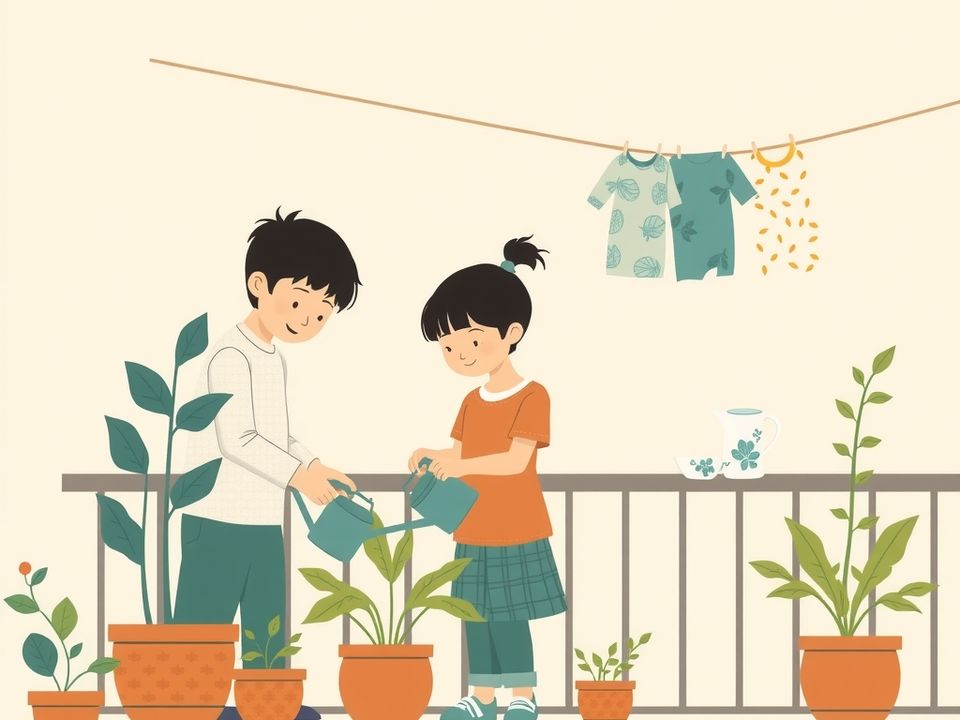
- Give each child regular jobs at home, and let them choose some of the jobs.46
- Hand over freedom in small, clear steps as your child shows they can handle it.
What’s normal at this age
Between 7 and 10, life fills up with homework, friends and screens. A few things are worth knowing.
Sleep still matters a lot. In a 2016 consensus statement, the American Academy of Sleep Medicine recommends 9 to 12 hours a day for children aged 6 to 12, and getting enough regularly is linked with better attention, behavior, learning and emotional control.123 Screen time is worth watching here. A systematic review of 67 studies of school-aged children and teens found screen time linked with shorter or later sleep in 90% of them, although the studies could not show cause and effect.117
Lies get more skilled. In an experiment with 4- to 8-year-olds, older children were more likely to lie and to keep the lie going under questioning.99 In another study, of 3- to 8-year-olds, keeping a lie going was linked with a more advanced understanding of what other people think.97 So catching lies matters less now than making the truth safe to tell.
Homework is new territory. In US research, the link between homework and achievement was weaker from kindergarten to grade 6 than in grades 7 to 12, and all the studies had design flaws.113 At this age, aim for a calm daily habit rather than perfect worksheets.
It is not too late. If things have gone off track, two meta-analyses found no evidence that parenting programs work better when started earlier in childhood. They included children up to age 11.9
From 10 on, puberty, peers and the move to secondary school change the picture; the Preteens page covers what’s normal at 10 to 12.
What works, and why
The core stays the same: warmth, clear expectations and calm, consistent consequences (see the best-proven approach). What changes is how much your child takes part.
Give responsibility, with support
Hand over real decisions within limits you set, explain your reasons and take your child’s point of view seriously. Researchers call this autonomy support and distinguish it from permissiveness: you still hold the limits.80 In a meta-analysis of 36 studies, parents’ autonomy support was linked with higher achievement, more motivation and engagement at school and better psychological health.157
Chores: real jobs, some choice
Give each child regular jobs that genuinely help, such as setting the table, feeding a pet or packing their own school bag, and let them choose some of them. In a meta-analysis of 41 studies, having a choice increased motivation, effort and performance, and the boost to motivation was bigger for children than for adults.46 See offering choices.
Should you pay for chores? Researchers disagree. One meta-analysis found that expected, tangible rewards reduced interest in activities, more so for children than for college students.134 Another concluded that rewards are generally not harmful and that rewards for dull tasks can raise motivation.131 Mixed evidence. Both found that praise helped and that promising tangible rewards for something a person already enjoys can backfire.134131 So if you pay, pay for extra jobs, not for reading or drawing.
Screens: a plan, not a nightly fight
In its 2026 policy statement on digital media, the American Academy of Pediatrics (AAP) points out that most digital platforms are designed to boost engagement and profit, not to support children’s health.122 So if your child struggles to stop, that is partly by design. Settle the rules ahead of time with a family screen plan: which days, how long, which games and apps, and where devices charge at night. Keep devices out of bedrooms at night; the sleep review above advises limiting screens especially before and during bedtime.117 See screens, and sleep and screens.
Homework: structure, then step back
Agree on when and where homework happens, keep it the same every day, and stay nearby rather than sitting over every problem. In a research synthesis, parents’ rule-setting about homework was more strongly linked with achievement than other kinds of involvement, and training parents to support homework raised completion and cut homework problems in elementary school children.124 Hands-on help is different. In a meta-analysis of 448 studies, most kinds of parent involvement in school were linked with better outcomes, but direct homework help was linked with lower achievement. That is a link, not proof of cause.111 A separate meta-analysis of middle schoolers, a few years older than your child, found the same exception.118 If homework often ends in tears or takes far longer than the teacher expects, talk to the teacher. See homework and homework on the Encouraging learning page.
Friends and peer problems
When your child comes home upset about a friend, listen first and hold off on fixing it. Ask what happened, what they want and what they could try, and let them choose. Take aggression seriously, whether it comes from a classmate or a sibling: in a national sample, sibling aggression and peer aggression were each linked with worse mental health in children and teens.103 If your child is being hurt, threatened or left out again and again, talk with the school.
Family meetings
A short weekly meeting gives problems a place to go other than the heat of the moment. Keep it to 15 or 20 minutes: start with something each person appreciates, take one problem at a time, let everyone suggest ideas, agree on one to try and review it the next week. See family meetings.
The evidence is for the problem-solving at its heart, and comes from children with serious behavior problems. In a randomized trial with 7- to 14-year-olds with oppositional defiant disorder, Collaborative & Proactive Solutions, a collaborative problem-solving approach, worked as well as parent management training: in both groups, about half the children were much improved and no longer met the diagnosis.44 In another trial, with 7- to 13-year-olds referred for severe antisocial behavior, problem-solving skills training combined with parent training worked better than either one alone.12 For everyday family life, see the meeting as a sensible habit, not a proven treatment.
Earning trust, step by step
Give more freedom in small, clear steps tied to what your child has shown: “When you’ve come straight home every day for two weeks, you can stop at the park on the way.” Knowing where your child is and who they are with is one of the core skills taught in Parent Management Training-Oregon (PMTO), along with encouragement, limit setting and problem solving.7 When trust is broken, keep the consequence related and short, and say exactly how it can be earned back. When your child tells you a hard truth, thank them first. See lying and privilege removal.
What backfires
Hands-on homework help. Direct help with homework was linked with lower achievement, though that is a link, not proof of cause (see above).111
Yelling, insults and shaming. In a study of mothers and 8- to 12-year-olds in 6 countries including China, yelling, physical punishment and expressing disappointment were linked with more aggression in children, and several techniques, shaming among them, with more anxiety.35 A US study of teenagers, a few years older than your child, found that parents’ harsh verbal discipline at 13 was linked with more behavior problems and depressive symptoms by 14, and parents’ warmth did not soften the link.65
Spanking. Some parents see physical discipline as normal in their culture and therefore harmless. In a study in 6 countries including China, it was less strongly linked with problems where it was seen as normal, but in every country more physical discipline went with more aggression and anxiety in children aged 6 to 17.58 In its 2018 policy statement on discipline, the AAP recommends against it.64 A minority of researchers argue that these links are likely due to other differences between families: in their meta-analysis, after accounting for how children were doing earlier, ordinary spanking explained less than 1% of the remaining differences in each outcome.62 The Physical discipline page lays out both sides.
Things you can say
Homework starts at 5 at the kitchen table. I’m right here if you get stuck.
The plan says tablets charge in the kitchen at 8. Do you want a 5-minute warning?
Here are this week’s jobs. Which two do you want?
Let’s put that on the list for Sunday’s family meeting and solve it together.
That sounds really hurtful. What would you like to happen next?
You’ve come straight home every day for two weeks. You’re ready to stop at the park on the way.
I’d rather hear it from you, even if it’s bad news. We can fix almost anything together.
I shouted at you, and that wasn’t okay. I’m sorry. Let’s start again.
Sources
The small numbers in the text point to these sources. Each one has a full entry on the Research page.
- Forgatch, M. S., & Kjøbli, J. (2016). Parent Management Training-Oregon Model: Adapting intervention with rigorous research. Family Process, 55(3), 500-513. See it on the Research page doi:10.1111/famp.12224 Back to the text
- Gardner, F., Leijten, P., Melendez-Torres, G. J., Landau, S., Harris, V., Mann, J., Beecham, J., Hutchings, J., & Scott, S. (2019). The earlier the better? Individual participant data and traditional meta-analysis of age effects of parenting interventions. Child Development, 90(1), 7-19. See it on the Research page doi:10.1111/cdev.13138 Back to the text
- Kazdin, A. E., Siegel, T. C., & Bass, D. (1992). Cognitive problem-solving skills training and parent management training in the treatment of antisocial behavior in children. Journal of Consulting and Clinical Psychology, 60(5), 733-747. See it on the Research page doi:10.1037/0022-006x.60.5.733 Back to the text
- Gershoff, E. T., Grogan-Kaylor, A., Lansford, J. E., Chang, L., Zelli, A., Deater-Deckard, K., & Dodge, K. A. (2010). Parent Discipline Practices in an International Sample: Associations With Child Behaviors and Moderation by Perceived Normativeness. Child Development, 81(2), 487-502. See it on the Research page doi:10.1111/j.1467-8624.2009.01409.x Back to the text
- Ollendick, T. H., Greene, R. W., Austin, K. E., Fraire, M. G., Halldorsdottir, T., Allen, K. B., Jarrett, M. A., Lewis, K. M., Whitmore Smith, M., Cunningham, N. R., Noguchi, R. J. P., Canavera, K., & Wolff, J. C. (2015). Parent Management Training and Collaborative & Proactive Solutions: A Randomized Control Trial for Oppositional Youth. Journal of Clinical Child & Adolescent Psychology, 45(5), 591-604. See it on the Research page doi:10.1080/15374416.2015.1004681 Back to the text
- Patall, E. A., Cooper, H., & Robinson, J. C. (2008). The effects of choice on intrinsic motivation and related outcomes: A meta-analysis of research findings. Psychological Bulletin, 134(2), 270-300. See it on the Research page doi:10.1037/0033-2909.134.2.270 Back to the text
- Lansford, J. E., Chang, L., Dodge, K. A., Malone, P. S., Oburu, P., Palmérus, K., Bacchini, D., Pastorelli, C., Bombi, A. S., Zelli, A., Tapanya, S., Chaudhary, N., Deater-Deckard, K., Manke, B., & Quinn, N. (2005). Physical Discipline and Children’s Adjustment: Cultural Normativeness as a Moderator. Child Development, 76(6), 1234-1246. See it on the Research page doi:10.1111/j.1467-8624.2005.00847.x Back to the text
- Larzelere, R. E., Gunnoe, M. L., Pritsker, J., & Ferguson, C. J. (2024). Resolving the Contradictory Conclusions from Three Reviews of Controlled Longitudinal Studies of Physical Punishment: A Meta-Analysis. Marriage & Family Review, 60(7), 395-433. See it on the Research page doi:10.1080/01494929.2024.2392672 Back to the text
- Sege, R. D., Siegel, B. S., Council on Child Abuse and Neglect, & Committee on Psychosocial Aspects of Child and Family Health (2018). Effective Discipline to Raise Healthy Children. Pediatrics, 142(6), e20183112. See it on the Research page doi:10.1542/peds.2018-3112 Back to the text
- Wang, M.-T., & Kenny, S. (2014). Longitudinal Links Between Fathers’ and Mothers’ Harsh Verbal Discipline and Adolescents’ Conduct Problems and Depressive Symptoms. Child Development, 85(3), 908-923. See it on the Research page doi:10.1111/cdev.12143 Back to the text
- Joussemet, M., Landry, R., & Koestner, R. (2008). A self-determination theory perspective on parenting. Canadian Psychology / Psychologie canadienne, 49(3), 194-200. See it on the Research page doi:10.1037/a0012754 Back to the text
- Talwar, V., & Lee, K. (2008). Social and Cognitive Correlates of Children’s Lying Behavior. Child Development, 79(4), 866-881. See it on the Research page doi:10.1111/j.1467-8624.2008.01164.x Back to the text
- Talwar, V., Arruda, C., & Yachison, S. (2015). The effects of punishment and appeals for honesty on children’s truth-telling behavior. Journal of Experimental Child Psychology, 130, 209-217. See it on the Research page doi:10.1016/j.jecp.2014.09.011 Back to the text
- Tucker, C. J., Finkelhor, D., Turner, H., & Shattuck, A. (2013). Association of Sibling Aggression With Child and Adolescent Mental Health. Pediatrics, 132(1), 79-84. See it on the Research page doi:10.1542/peds.2012-3801 Back to the text
- Barger, M. M., Kim, E. M., Kuncel, N. R., & Pomerantz, E. M. (2019). The relation between parents’ involvement in children’s schooling and children’s adjustment: A meta-analysis. Psychological Bulletin, 145(9), 855-890. See it on the Research page doi:10.1037/bul0000201 Back to the text
- Cooper, H., Robinson, J. C., & Patall, E. A. (2006). Does Homework Improve Academic Achievement? A Synthesis of Research, 1987-2003. Review of Educational Research, 76(1), 1-62. See it on the Research page doi:10.3102/00346543076001001 Back to the text
- Hale, L., & Guan, S. (2015). Screen time and sleep among school-aged children and adolescents: A systematic literature review. Sleep Medicine Reviews, 21, 50-58. See it on the Research page doi:10.1016/j.smrv.2014.07.007 Back to the text
- Hill, N. E., & Tyson, D. F. (2009). Parental involvement in middle school: A meta-analytic assessment of the strategies that promote achievement. Developmental Psychology, 45(3), 740-763. See it on the Research page doi:10.1037/a0015362 Back to the text
- Munzer, T., Parga-Belinkie, J., Milkovich, L. M., Tomopoulos, S., Ajumobi, T., Cross, C., Gerwin, R., Madigan, S., & American Academy of Pediatrics Council on Communications and Media (2026). Digital Ecosystems, Children, and Adolescents: Policy Statement. Pediatrics, 157(2), e2025075320. See it on the Research page doi:10.1542/peds.2025-075320 Back to the text
- Paruthi, S., et al. (2016). Recommended Amount of Sleep for Pediatric Populations: A Consensus Statement of the American Academy of Sleep Medicine. Journal of Clinical Sleep Medicine, 12(6), 785-786. See it on the Research page doi:10.5664/jcsm.5866 Back to the text
- Patall, E. A., Cooper, H., & Robinson, J. C. (2008). Parent Involvement in Homework: A Research Synthesis. Review of Educational Research, 78(4), 1039-1101. See it on the Research page doi:10.3102/0034654308325185 Back to the text
- Cameron, J., Banko, K. M., & Pierce, W. D. (2001). Pervasive negative effects of rewards on intrinsic motivation: The myth continues. The Behavior Analyst, 24(1), 1-44. See it on the Research page doi:10.1007/bf03392017 Back to the text
- Deci, E. L., Koestner, R., & Ryan, R. M. (1999). A meta-analytic review of experiments examining the effects of extrinsic rewards on intrinsic motivation. Psychological Bulletin, 125(6), 627-668. See it on the Research page doi:10.1037/0033-2909.125.6.627 Back to the text
- Vasquez, A. C., Patall, E. A., Fong, C. J., Corrigan, A. S., & Pine, L. (2016). Parent autonomy support, academic achievement, and psychosocial functioning: A meta-analysis of research. Educational Psychology Review, 28(3), 605-644. See it on the Research page doi:10.1007/s10648-015-9329-z Back to the text