Encouraging learning

Much of early learning happens in ordinary moments: a chat in the bath, a picture book at bedtime, a game on the floor. Here is what research says helps at each age, and where it is still unsure.

Start here

  1. Have back-and-forth conversations every day: answer what your child says or points at, then pause for their turn.
  2. Share a book most days, and ask questions so your child does some of the talking.148
  3. Praise what your child does (the effort, the strategy, the progress) more than what they are.
  4. Offer small, real choices, such as which book to read or which task to do first.46
  5. Protect sleep, and keep screens out of meals and the hour before bed.110
A parent and a child sit close together on a cozy sofa, sharing a picture book with a whale on the page.

Learning by age

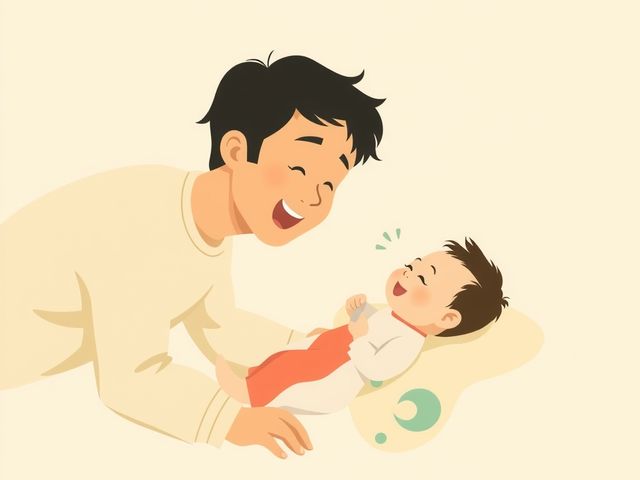
  • A parent lies face to face with a babbling baby on a play mat and responds with a bright expression.
    0-12 months

    Babies (0-12 months)

    In the first year, helping your baby learn starts with the most ordinary things: notice what your baby does, answer it, and give them a turn.
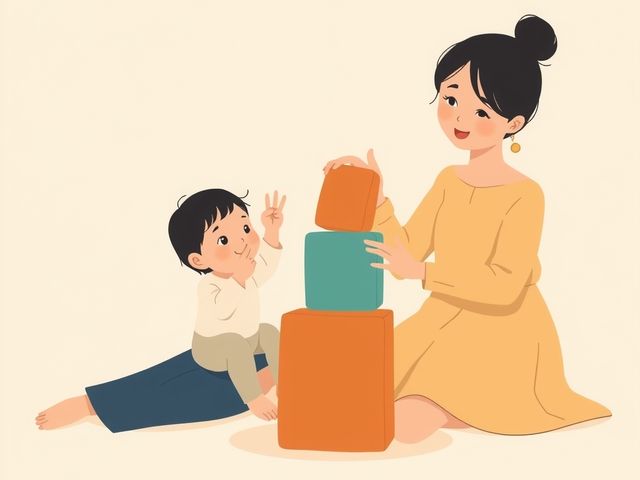
  • A toddler and a parent stack big soft blocks on the floor; the toddler holds up fingers while the parent adds a block.
    1-3 years

    Toddlers (1-3 years)

    Toddlers pick up words, numbers and persistence in the middle of ordinary days. Keep the conversation going, read together, let them try things themselves, and notice their effort.

  • 3-5 years

    Preschoolers (3-5 years)

    Preschoolers can talk about yesterday, imagine tomorrow and argue about the rules of a game. That makes this a great age for stories, questions, board games and practice at waiting.
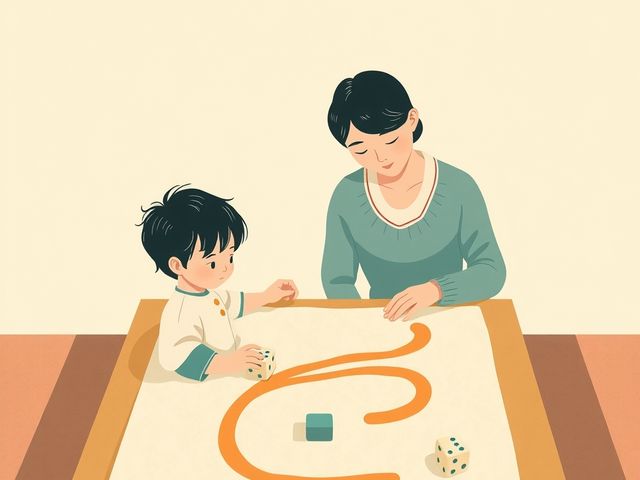
  • A child and a parent play a board game with a winding orange path; the child holds a die while the parent watches.
    5-7 years

    Starting school (5-7 years)

    Starting school brings new skills and new pressures. Your part at home is mostly small, ordinary things done often: reading together, playing with numbers, a calm homework routine and enough sleep.
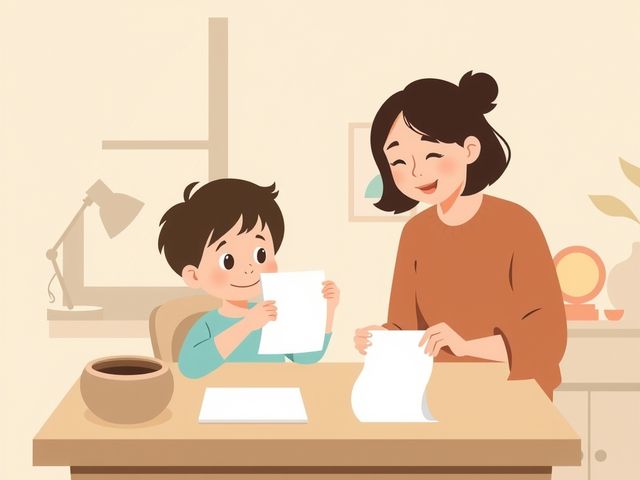
  • An older child holds up a card to quiz themselves at a table while a parent beside them smiles and helps.
    7-10 years

    School age (7-10 years)

    From 7 to 10, school asks more, and homework and screens can fill the evenings. What helps at home is steady and low-key: a homework routine, better ways to practice, real choices and protected sleep.

  • 10-12 years

    Preteens (10-12 years)

    From 10 to 12, school asks for more independent work and your child asks for more independence. What helps at home is a calm homework routine, study methods that actually work, real choices, praise for the work rather than the person, and protected sleep.

About this section

Children learn from the people around them long before they start school, and much of that learning happens in everyday moments. This section brings together what research says about helping that along, from birth to about age 12: conversation, books, play, praise, motivation, focus and self-control, numbers, sleep and screens, and, for school-age children, homework and study habits.

Choose your child’s age above. Each age page starts with a few things to do now and ends with a one-page printable. You can also find all of them under Printables.

Everything here comes from academic sources: meta-analyses, trials, long-term studies and the published policy statements of medical bodies, all listed on the Research page. Findings that rest on a single study, on studies that disagree, or on studies of older children are marked Mixed evidence. so you can weigh them yourself. How to read the evidence explains the difference between a link and a cause.

None of this needs special toys, apps or classes, and no family does all of it. Pick one or two ideas that fit your days.

Big ideas for every age

Talk with your child, not just to them

Young children learn language through back-and-forth: they make a sound, look or point, you respond, and they take another turn. A review of infant research reports that parents’ responsiveness predicts babies’ word learning,156 and in a randomized trial, coaching mothers to respond more helped their babies’ social, emotional, communication and thinking skills grow.14

One long-term study that recorded families at home linked back-and-forth turns at 18-24 months with children’s language and IQ scores 10 years later, while the sheer number of words adults spoke was much less strongly linked once socioeconomic status was taken into account.78 Mixed evidence.

Books, with your child talking too

A meta-analysis of studies on how often parents read to preschoolers linked shared reading with language growth, early literacy and reading achievement, whatever the family’s socioeconomic status.130 A meta-analysis of 19 trials that coached parents to share picture books found small gains in children’s language and a large gain in parents’ book-sharing skills, and programs that gave less coaching did little.136

Asking questions and letting the child do more of the telling is called dialogic reading. In a meta-analysis of 16 studies, it gave a moderate boost to the words children can say, compared with ordinary shared reading.148

Play, with a light guiding hand

The American Academy of Pediatrics describes play with parents and other children as a singular opportunity to build social, emotional, thinking, language and self-regulation skills.108 In a meta-analysis, guided play (the child leads, an adult gently steers toward something to learn) did better than direct teaching for early math, shapes and switching between tasks, and better than free play for words about space and position, but no differences were found on other key outcomes.154 Mixed evidence.

Praise what your child did

In a study that observed 53 families at home, more praise for toddlers’ effort was linked with children believing, at 7-8 years old, that ability can grow, and with enjoying challenges more.140 Mixed evidence.

In experiments with 5- and 6-year-olds and with fifth graders, children praised for being clever, or for who they are rather than what they did, coped worse with a later setback;38149 yet the home study found that parents’ praise of traits was not linked with fixed beliefs later on.140 Mixed evidence.

So there is no need to police every word. The habit worth building is simple: say what your child did, such as “You kept trying different pieces until it fit.”

Support your child’s own drive

Autonomy support means taking your child’s point of view seriously, offering real choices within your limits and explaining your reasons. A review stresses that it is not the same as permissiveness,80 and a meta-analysis of 36 studies linked parents’ autonomy support with higher achievement, more self-driven motivation and better psychological health.157 Across 41 studies, simply having a choice raised motivation, effort and performance, and the boost to motivation was bigger for children than for adults.46

Rewards are more debated. One meta-analysis found that rewards for doing, finishing or doing well at a task undermined later interest in it, and that tangible rewards tended to be more harmful for children than for college students;134 another concluded that rewards are generally not harmful.131 Mixed evidence. Both report that a tangible prize promised in advance for something already interesting can reduce interest, and that positive feedback can help, though one found it tended to help children less than college students.134131

Focus and self-control can be practiced

Executive functions are the mental skills behind focus and self-control. A review names three core ones, holding back an impulse, holding information in mind (working memory) and switching flexibly between ideas, and notes that stress, lack of sleep, loneliness and lack of exercise all impair them.72

A series of meta-analyses of programs for children up to age 12 found that these skills can be strengthened, but no convincing evidence that the gains last. Approaches that built the skills into other activities worked as well as or better than direct training, and the authors note they are more enjoyable for children.155 Mixed evidence.

Numbers belong in everyday talk

A meta-analysis of 64 studies found a positive, statistically significant link between the home math environment (the math-related activities, talk, attitudes and expectations at home) and children’s math achievement, with an average correlation of r = .13 and large differences between studies.133 Effect sizes explains what numbers like this mean.

Counting things your child can see, especially groups of 4 to 10, was the kind of number talk linked with children’s later grasp of what number words mean.139 Mixed evidence.

Enough sleep, and screens in their place

The American Academy of Sleep Medicine, in a statement the American Academy of Pediatrics endorsed, recommends daily sleep by age (for example 10-13 hours at ages 3-5 and 9-12 hours at ages 6-12) and links getting enough sleep regularly with better attention, behavior, learning, memory and emotional regulation.123

In its 2016 statement on young children and media, the AAP recommended no screens other than video calls before 18 months; for parents who introduce media at 18-24 months, high-quality content used together; no more than 1 hour a day of high-quality programs for children over 2; and screen-free meals and no screens in the hour before bed.110 Its newest policy, from 2026, notes that most digital platforms are designed to boost engagement and profit, not children’s health and development.122

School age: stay involved, and practice remembering

A meta-analysis of 448 studies found small positive links between parents’ involvement in school, such as talking about school and going to school events, and children’s achievement, engagement and motivation. The one exception was direct help with homework, which was linked with lower achievement.111 When parents were trained in how to support homework, though, elementary school children finished more of it and had fewer homework problems.124 Mixed evidence.

For studying, a review of 10 study techniques rated practice testing and spreading practice out over time as high-utility techniques,137 and an experiment found that even first graders remembered more words when a test was added to restudying.145 The pages for 5-7 years and 7-10 years go into homework and study habits.

How strong is the evidence?

A quick guide to which findings in this section are solid and which are still open.

Fairly solid

  • Reading with young children is linked with language and early literacy, and programs that coach parents in sharing books give small gains in children’s language.130136
  • Having choices raises motivation, effort and performance, and the boost to motivation is bigger for children than for adults.46
  • Practicing recall helps memory more than restudying or other comparison activities, including in studies with preschoolers and first graders.138145126
  • The sleep hours come from an expert consensus statement built on a review of 864 published articles.123

Mixed or still open

  • Growth mindset programs: one report of two meta-analyses found both the link between mindset and school achievement and the effect of mindset programs weak overall,153 a later meta-analysis found a small effect that was no longer significant after correcting for publication bias, or in the highest-quality studies,146 and another found benefits for some targeted groups when programs were delivered as designed, with wide variation expected between programs.129 Mixed evidence.
  • A national US experiment found that a short online mindset program raised grades for lower-achieving students, but it was done with high school students, not young children.160 Mixed evidence.
  • Praise: laboratory studies favor praising effort over intelligence, but a home study found no link between trait praise and later fixed beliefs.149140 Mixed evidence.
  • In a study of children with an average age of about 10, praise for personal qualities, but not for behavior, made children more likely to feel ashamed after failing, especially children with low self-esteem.128 Mixed evidence.
  • Rewards: meta-analyses disagree on how widely rewards undermine children’s interest.134131 Mixed evidence.
  • Executive function training: gains appear, but lasting effects have not been convincingly shown.135155 Mixed evidence.
  • Dialogic reading and age: one meta-analysis found a smaller benefit at ages 4-5, another found child age made no difference to how much book-sharing programs helped.148136 Mixed evidence.
  • Homework help: one meta-analysis linked parents’ homework involvement with better results in elementary school, another linked direct homework help with lower achievement, and both links come from correlational studies.124111 Mixed evidence.
  • Much of the research on talk, number talk and screen time comes from single studies that observed families, so it shows links, not proof of cause.9414486 Mixed evidence. See correlation and causation.

Sources

The small numbers in the text point to these sources. Each one has a full entry on the Research page.

  1. Landry, S. H., Smith, K. E., & Swank, P. R. (2006). Responsive parenting: Establishing early foundations for social, communication, and independent problem-solving skills. Developmental Psychology, 42(4), 627-642. See it on the Research page doi:10.1037/0012-1649.42.4.627 Back to the text
  2. Kamins, M. L., & Dweck, C. S. (1999). Person versus process praise and criticism: Implications for contingent self-worth and coping. Developmental Psychology, 35(3), 835-847. See it on the Research page doi:10.1037/0012-1649.35.3.835 Back to the text
  3. Patall, E. A., Cooper, H., & Robinson, J. C. (2008). The effects of choice on intrinsic motivation and related outcomes: A meta-analysis of research findings. Psychological Bulletin, 134(2), 270-300. See it on the Research page doi:10.1037/0033-2909.134.2.270 Back to the text
  4. Diamond, A. (2013). Executive Functions. Annual Review of Psychology, 64(1), 135-168. See it on the Research page doi:10.1146/annurev-psych-113011-143750 Back to the text
  5. Gilkerson, J., Richards, J. A., Warren, S. F., Oller, D. K., Russo, R., & Vohr, B. (2018). Language Experience in the Second Year of Life and Language Outcomes in Late Childhood. Pediatrics, 142(4), e20174276. See it on the Research page doi:10.1542/peds.2017-4276 Back to the text
  6. Joussemet, M., Landry, R., & Koestner, R. (2008). A self-determination theory perspective on parenting. Canadian Psychology / Psychologie canadienne, 49(3), 194-200. See it on the Research page doi:10.1037/a0012754 Back to the text
  7. Madigan, S., Browne, D., Racine, N., Mori, C., & Tough, S. (2019). Association Between Screen Time and Children’s Performance on a Developmental Screening Test. JAMA Pediatrics, 173(3), 244. See it on the Research page doi:10.1001/jamapediatrics.2018.5056 Back to the text
  8. Romeo, R. R., Leonard, J. A., Robinson, S. T., West, M. R., Mackey, A. P., Rowe, M. L., & Gabrieli, J. D. E. (2018). Beyond the 30-Million-Word Gap: Children’s Conversational Exposure Is Associated With Language-Related Brain Function. Psychological Science, 29(5), 700-710. See it on the Research page doi:10.1177/0956797617742725 Back to the text
  9. Yogman, M., Garner, A., Hutchinson, J., Hirsh-Pasek, K., Golinkoff, R. M., Committee on Psychosocial Aspects of Child and Family Health, & Council on Communications and Media (2018). The Power of Play: A Pediatric Role in Enhancing Development in Young Children. Pediatrics, 142(3), e20182058. See it on the Research page doi:10.1542/peds.2018-2058 Back to the text
  10. American Academy of Pediatrics, Council on Communications and Media (2016). Media and Young Minds. Pediatrics, 138(5), e20162591. See it on the Research page doi:10.1542/peds.2016-2591 Back to the text
  11. Barger, M. M., Kim, E. M., Kuncel, N. R., & Pomerantz, E. M. (2019). The relation between parents’ involvement in children’s schooling and children’s adjustment: A meta-analysis. Psychological Bulletin, 145(9), 855-890. See it on the Research page doi:10.1037/bul0000201 Back to the text
  12. Munzer, T., Parga-Belinkie, J., Milkovich, L. M., Tomopoulos, S., Ajumobi, T., Cross, C., Gerwin, R., Madigan, S., & American Academy of Pediatrics Council on Communications and Media (2026). Digital Ecosystems, Children, and Adolescents: Policy Statement. Pediatrics, 157(2), e2025075320. See it on the Research page doi:10.1542/peds.2025-075320 Back to the text
  13. Paruthi, S., et al. (2016). Recommended Amount of Sleep for Pediatric Populations: A Consensus Statement of the American Academy of Sleep Medicine. Journal of Clinical Sleep Medicine, 12(6), 785-786. See it on the Research page doi:10.5664/jcsm.5866 Back to the text
  14. Patall, E. A., Cooper, H., & Robinson, J. C. (2008). Parent Involvement in Homework: A Research Synthesis. Review of Educational Research, 78(4), 1039-1101. See it on the Research page doi:10.3102/0034654308325185 Back to the text
  15. Adesope, O. O., Trevisan, D. A., & Sundararajan, N. (2017). Rethinking the Use of Tests: A Meta-Analysis of Practice Testing. Review of Educational Research, 87(3), 659-701. See it on the Research page doi:10.3102/0034654316689306 Back to the text
  16. Brummelman, E., Thomaes, S., Overbeek, G., Orobio de Castro, B., van den Hout, M. A., & Bushman, B. J. (2014). On feeding those hungry for praise: Person praise backfires in children with low self-esteem. Journal of Experimental Psychology: General, 143(1), 9-14. See it on the Research page doi:10.1037/a0031917 Back to the text
  17. Burnette, J. L., Billingsley, J., Banks, G. C., Knouse, L. E., Hoyt, C. L., Pollack, J. M., & Simon, S. (2023). A systematic review and meta-analysis of growth mindset interventions: For whom, how, and why might such interventions work?. Psychological Bulletin, 149(3-4), 174-205. See it on the Research page doi:10.1037/bul0000368 Back to the text
  18. Bus, A. G., van IJzendoorn, M. H., & Pellegrini, A. D. (1995). Joint Book Reading Makes for Success in Learning to Read: A Meta-Analysis on Intergenerational Transmission of Literacy. Review of Educational Research, 65(1), 1-21. See it on the Research page doi:10.3102/00346543065001001 Back to the text
  19. Cameron, J., Banko, K. M., & Pierce, W. D. (2001). Pervasive negative effects of rewards on intrinsic motivation: The myth continues. The Behavior Analyst, 24(1), 1-44. See it on the Research page doi:10.1007/bf03392017 Back to the text
  20. Daucourt, M. C., Napoli, A. R., Quinn, J. M., Wood, S. G., & Hart, S. A. (2021). The home math environment and math achievement: A meta-analysis. Psychological Bulletin, 147(6), 565-596. See it on the Research page doi:10.1037/bul0000330 Back to the text
  21. Deci, E. L., Koestner, R., & Ryan, R. M. (1999). A meta-analytic review of experiments examining the effects of extrinsic rewards on intrinsic motivation. Psychological Bulletin, 125(6), 627-668. See it on the Research page doi:10.1037/0033-2909.125.6.627 Back to the text
  22. Diamond, A., & Lee, K. (2011). Interventions Shown to Aid Executive Function Development in Children 4 to 12 Years Old. Science, 333(6045), 959-964. See it on the Research page doi:10.1126/science.1204529 Back to the text
  23. Dowdall, N., Melendez-Torres, G. J., Murray, L., Gardner, F., Hartford, L., & Cooper, P. J. (2020). Shared Picture Book Reading Interventions for Child Language Development: A Systematic Review and Meta-Analysis. Child Development, 91(2), e383-e399. See it on the Research page doi:10.1111/cdev.13225 Back to the text
  24. Dunlosky, J., Rawson, K. A., Marsh, E. J., Nathan, M. J., & Willingham, D. T. (2013). Improving Students’ Learning With Effective Learning Techniques: Promising Directions From Cognitive and Educational Psychology. Psychological Science in the Public Interest, 14(1), 4-58. See it on the Research page doi:10.1177/1529100612453266 Back to the text
  25. Fritz, C. O., Morris, P. E., Nolan, D., & Singleton, J. (2007). Expanding retrieval practice: An effective aid to preschool children’s learning. Quarterly Journal of Experimental Psychology, 60(7), 991-1004. See it on the Research page doi:10.1080/17470210600823595 Back to the text
  26. Gunderson, E. A., & Levine, S. C. (2011). Some types of parent number talk count more than others: relations between parents’ input and children’s cardinal-number knowledge. Developmental Science, 14(5), 1021-1032. See it on the Research page doi:10.1111/j.1467-7687.2011.01050.x Back to the text
  27. Gunderson, E. A., Gripshover, S. J., Romero, C., Dweck, C. S., Goldin-Meadow, S., & Levine, S. C. (2013). Parent Praise to 1- to 3-Year-Olds Predicts Children’s Motivational Frameworks 5 Years Later. Child Development, 84(5), 1526-1541. See it on the Research page doi:10.1111/cdev.12064 Back to the text
  28. Levine, S. C., Suriyakham, L. W., Rowe, M. L., Huttenlocher, J., & Gunderson, E. A. (2010). What counts in the development of young children’s number knowledge?. Developmental Psychology, 46(5), 1309-1319. See it on the Research page doi:10.1037/a0019671 Back to the text
  29. Lipowski, S. L., Pyc, M. A., Dunlosky, J., & Rawson, K. A. (2014). Establishing and explaining the testing effect in free recall for young children. Developmental Psychology, 50(4), 994-1000. See it on the Research page doi:10.1037/a0035202 Back to the text
  30. Macnamara, B. N., & Burgoyne, A. P. (2023). Do growth mindset interventions impact students’ academic achievement? A systematic review and meta-analysis with recommendations for best practices. Psychological Bulletin, 149(3-4), 133-173. See it on the Research page doi:10.1037/bul0000352 Back to the text
  31. Mol, S. E., Bus, A. G., de Jong, M. T., & Smeets, D. J. H. (2008). Added Value of Dialogic Parent-Child Book Readings: A Meta-Analysis. Early Education and Development, 19(1), 7-26. See it on the Research page doi:10.1080/10409280701838603 Back to the text
  32. Mueller, C. M., & Dweck, C. S. (1998). Praise for intelligence can undermine children’s motivation and performance. Journal of Personality and Social Psychology, 75(1), 33-52. See it on the Research page doi:10.1037/0022-3514.75.1.33 Back to the text
  33. Sisk, V. F., Burgoyne, A. P., Sun, J., Butler, J. L., & Macnamara, B. N. (2018). To What Extent and Under Which Circumstances Are Growth Mind-Sets Important to Academic Achievement? Two Meta-Analyses. Psychological Science, 29(4), 549-571. See it on the Research page doi:10.1177/0956797617739704 Back to the text
  34. Skene, K., O’Farrelly, C. M., Byrne, E. M., Kirby, N., Stevens, E. C., & Ramchandani, P. G. (2022). Can guidance during play enhance children’s learning and development in educational contexts? A systematic review and meta-analysis. Child Development, 93(4), 1162-1180. See it on the Research page doi:10.1111/cdev.13730 Back to the text
  35. Takacs, Z. K., & Kassai, R. (2019). The efficacy of different interventions to foster children’s executive function skills: A series of meta-analyses. Psychological Bulletin, 145(7), 653-697. See it on the Research page doi:10.1037/bul0000195 Back to the text
  36. Tamis-LeMonda, C. S., Kuchirko, Y., & Song, L. (2014). Why Is Infant Language Learning Facilitated by Parental Responsiveness?. Current Directions in Psychological Science, 23(2), 121-126. See it on the Research page doi:10.1177/0963721414522813 Back to the text
  37. Vasquez, A. C., Patall, E. A., Fong, C. J., Corrigan, A. S., & Pine, L. (2016). Parent autonomy support, academic achievement, and psychosocial functioning: A meta-analysis of research. Educational Psychology Review, 28(3), 605-644. See it on the Research page doi:10.1007/s10648-015-9329-z Back to the text
  38. Yeager, D. S., Hanselman, P., Walton, G. M., Murray, J. S., Crosnoe, R., Muller, C., Tipton, E., Schneider, B., Hulleman, C. S., Hinojosa, C. P., Paunesku, D., Romero, C., Flint, K., Roberts, A., Trott, J., Iachan, R., Buontempo, J., Yang, S. M., Carvalho, C. M., . . . Dweck, C. S. (2019). A national experiment reveals where a growth mindset improves achievement. Nature, 573(7774), 364-369. See it on the Research page doi:10.1038/s41586-019-1466-y Back to the text